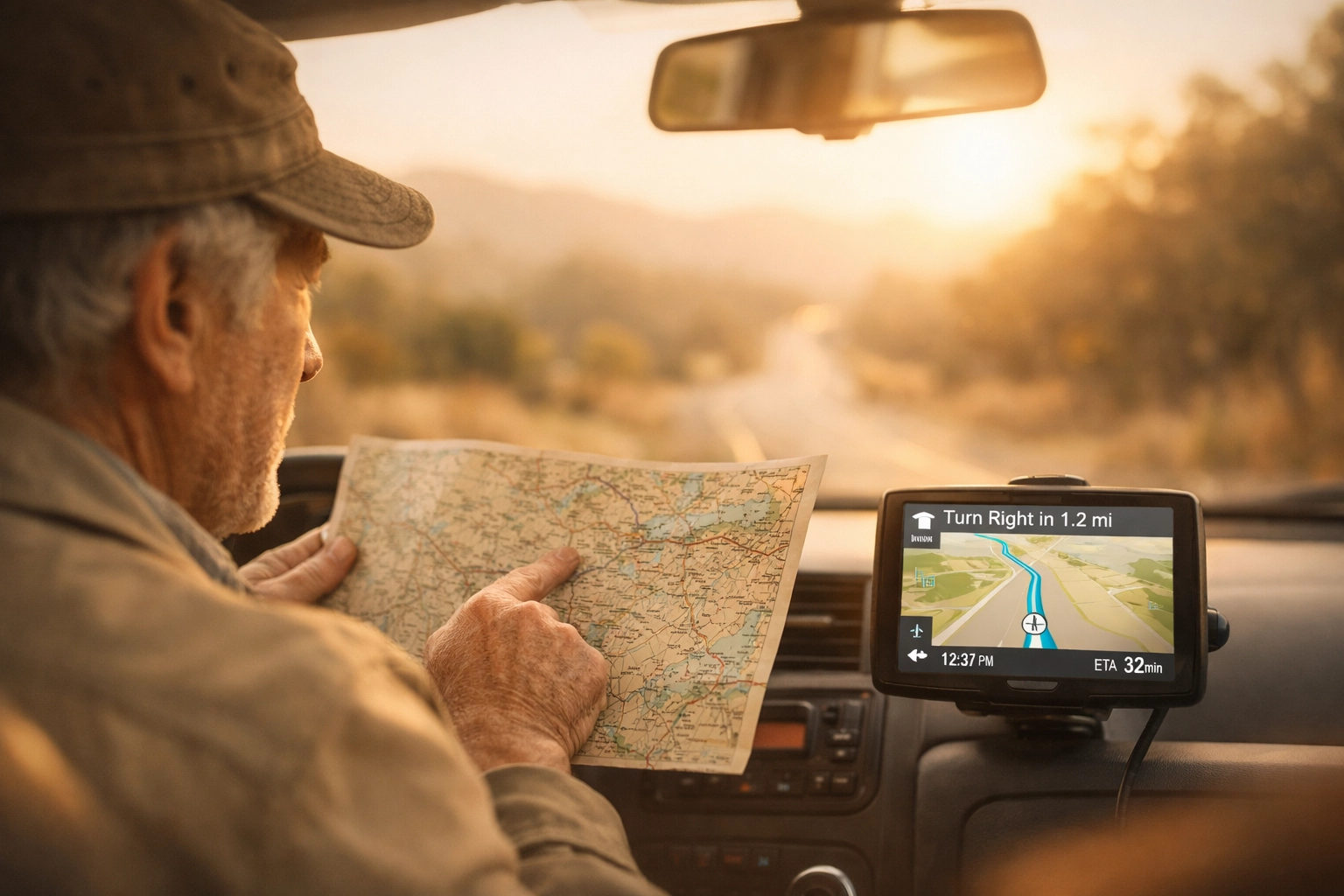
There's a specific kind of panic that sets in for the younger generation when the blue dot on their phone screen starts spinning.
Without the GPS, the world feels like a maze.
In our 20s and 30s, we were exactly like that. We followed the "map" that was handed to us: go to school, get the job, climb the ladder, check the boxes. We followed the turn-by-turn instructions because we didn't know the territory yet.
If the "signal" of external validation or a clear career path dropped out, we were lost.
But something happens when you've been driving for thirty years.
You stop looking at the screen.
The Shift from Passenger to Navigator
After 50, you aren't just following a map. You've become the Navigator.
You've driven these roads through the rain, the detours, and the occasional engine fire. You don't need a digital voice to tell you that a certain "opportunity" is actually a dead end.
You can feel it in the steering wheel.

The younger crowd processes every data point. They wait for the algorithm to suggest the next move. They refresh LinkedIn for the latest "career hack" or bestselling business book that promises the secret formula.
Meanwhile, you're already three exits ahead.
Not because you're rushing. Because you don't have to stop and recalculate every time the road bends.
What the GPS Can't Tell You
Data is useful. Experience is irreplaceable.
The GPS tells you which route is fastest based on traffic patterns and road conditions. It doesn't tell you that the "fast route" runs through a neighborhood where you'll hit every red light. It doesn't warn you that the shortcut is actually a construction zone that's been backed up for two years.
You know this because you've been there.
The same principle applies to career moves, business decisions, and personal reinvention. The younger generation relies on external signals: job postings, trending industries, what's "hot" right now.
You've learned to trust something quieter: instinct.
Instinct isn't magic. It's pattern recognition built from decades of real-world experience. It's the ability to read a room, sense when a deal is too good to be true, and know exactly which battles are worth fighting.
The GPS gives you information. Experience gives you wisdom.
And wisdom is always the shortcut.
The Hidden Advantage of Age
This is the part nobody tells you when you're young.
They sell you on speed, energy, and ambition. They tell you that youth is the competitive edge. But they leave out the most critical advantage: seasoned judgment.

While the 30-year-old is busy triple-checking the data and asking for a second opinion, you've already made the call. You've seen this scenario play out five times before. You know how it ends.
This isn't arrogance. It's efficiency.
The younger crowd mistakes this confidence for luck or privilege. They don't realize it's earned. Every wrong turn, every missed opportunity, every "learning experience" that nearly bankrupted you: those are the roads that taught you where not to go.
You aren't guessing. You're navigating.
When the Map Runs Out
Here's where it gets interesting.
The younger generation has a massive blind spot: they panic when the map runs out. When the career path isn't clearly marked, when the industry shifts, when the job title they were chasing disappears: they freeze.
You don't.
Because you've been off the grid before. You've taken the unmarked road, the risky pivot, the career move that didn't come with a job description. You've learned that the best opportunities don't always show up on a screen.
Sometimes the best route is the one you create yourself.
This is what reinvention after 50 looks like. It's not about following someone else's map. It's about trusting your internal compass and taking the scenic route: because that's usually where the real growth happens.
The Scenic Route is the Smart Route
The GPS optimizes for speed. Experience optimizes for meaning.
At 25, you take the fastest route because you're racing against some invisible clock. You think the goal is to arrive first. You measure success by how quickly you hit the milestones.
At 50, you've realized something the GPS will never tell you: the scenic route is often the smart route.
It's the detour that leads to the unexpected partnership. It's the "inefficient" lunch meeting that turns into a career pivot. It's the slower, steadier path that doesn't burn you out before you reach the destination.
The younger generation mistakes this for lack of ambition. They don't understand that you're not moving slower: you're moving smarter.
You've learned that the fastest route isn't always the best route. Sometimes the longer path is the one that actually gets you where you want to go.

Trust the Navigator
If you're feeling like the "map" for your next chapter is a bit blurry, that's not a sign you're lost.
It's a sign you're ready to stop following someone else's directions.
You've already got the best navigation system ever built. It's called instinct. It's called experience. It's called three decades of driving through every kind of weather and coming out the other side.
The younger crowd will keep refreshing their screens, waiting for the algorithm to tell them what to do next.
You don't need to wait.
You've been here before. You know the shortcuts that don't show up on a screen: the relationships that matter, the risks that are worth taking, and the gut feeling that tells you exactly when to take the exit and reinvent the whole trip.
You aren't lost. You're navigating.
And that's the ultimate competitive advantage.
Ready for Your Next Turn?
Reinvention after 50 isn't about finding the fastest route. It's about trusting yourself enough to take the road that makes sense for you: even if it's not the one everyone else is taking.
My book, Coming Home After 50, is out now (launched Feb 6). It's my personal guide to navigating the roads they don't teach you about in your 20s. The turns that matter. The shortcuts nobody tells you about. The scenic routes worth taking.
Sign up for the newsletter and get the roadmap delivered straight to your inbox every week.
And if you're ready to know exactly what to do Monday morning: no guessing, no GPS required: grab First Things First. Get it your way: PDF, audio, or video. It's the clearest, most practical starting point for your next chapter.
Join us at empowerover50.com. Let's navigate this together.